
Dive Into KCNA Practice Exams
5 full mock exams, 320 questions, detailed explanations for every answer - built to help you identify weak areas, sharpen your timing, and walk into the real KCNA with confidence.
- Kubernetes
- Certification Prep
- Practice Exams
- Cloud Native
- 320 Questions

CNCF Ambassador • Kubestronaut • Docker Captain
5 full mock exams, 320 questions, detailed explanations for every answer - built to help you identify weak areas, sharpen your timing, and walk into the real KCNA with confidence.
What You'll Learn
Which KCNA domains you already understand well and which need more revision
Whether your current pace is strong enough for the real 60-question, 90-minute exam
Where common traps and misunderstandings appear across the KCNA curriculum
How to approach the real KCNA with much greater confidence
Course Description
5 full mock exams, each containing 64 carefully written questions, for a total of 320 questions. The real KCNA is 60 questions in 90 minutes - these mocks intentionally use 64 questions to give you slightly broader topic coverage while training the pace, pressure, and decision-making required on exam day.
Questions are balanced against the official KCNA domain weighting - Kubernetes Fundamentals (44%), Container Orchestration (28%), Cloud Native Application Delivery (16%), and Cloud Native Architecture (12%) - rather than being a random collection of loosely related Kubernetes trivia.
Every answer comes with a detailed explanation. This means the course becomes most valuable when you get a question wrong. You can review why the correct answer is right, why the other options are wrong, and what concept you need to revisit before your next attempt. That is where real progress happens.
Start with Mock Exam 1, review every explanation carefully, strengthen your weaker areas, and then come back stronger. That is how confident KCNA results are built.
Every Answer Is a Learning Opportunity
This is not just a score generator. Every question comes with a detailed explanation that teaches you the material.
When you get a question wrong, the explanation shows you why the correct answer is right, why the other options are wrong, and what concept you need to revisit. That reflective feedback loop is where real progress happens.
Questions cover the full breadth of the KCNA objectives including Kubernetes concepts, scheduling, containerization, networking, security, storage, observability, GitOps, Helm, CI/CD, Gateway API, and the wider cloud native ecosystem.
🎯 Try an example question below to see the format and explanation depth!
What is the primary function of the Kubelet in a Kubernetes cluster?
About the Exam
KCNA Certification Exam Details
Everything you need to know about the certification exam
Duration
90 minutes
Format
Multiple Choice
Passing Score
75%
Retake
One Retake Included
Exam Content Breakdown
Save 30% with DiveInto
Get 30% off the Kubernetes and Cloud Native Certification Exam. This code also works on all other CNCF certifications including CKA, CKAD, CKS, and KCSA.
DIVEINTO30Exam Tips
The exam is designed to test practical knowledge and understanding of cloud-native concepts. Focus on hands-on experience and real-world scenarios covered in this course.
Kubestronaut Certified
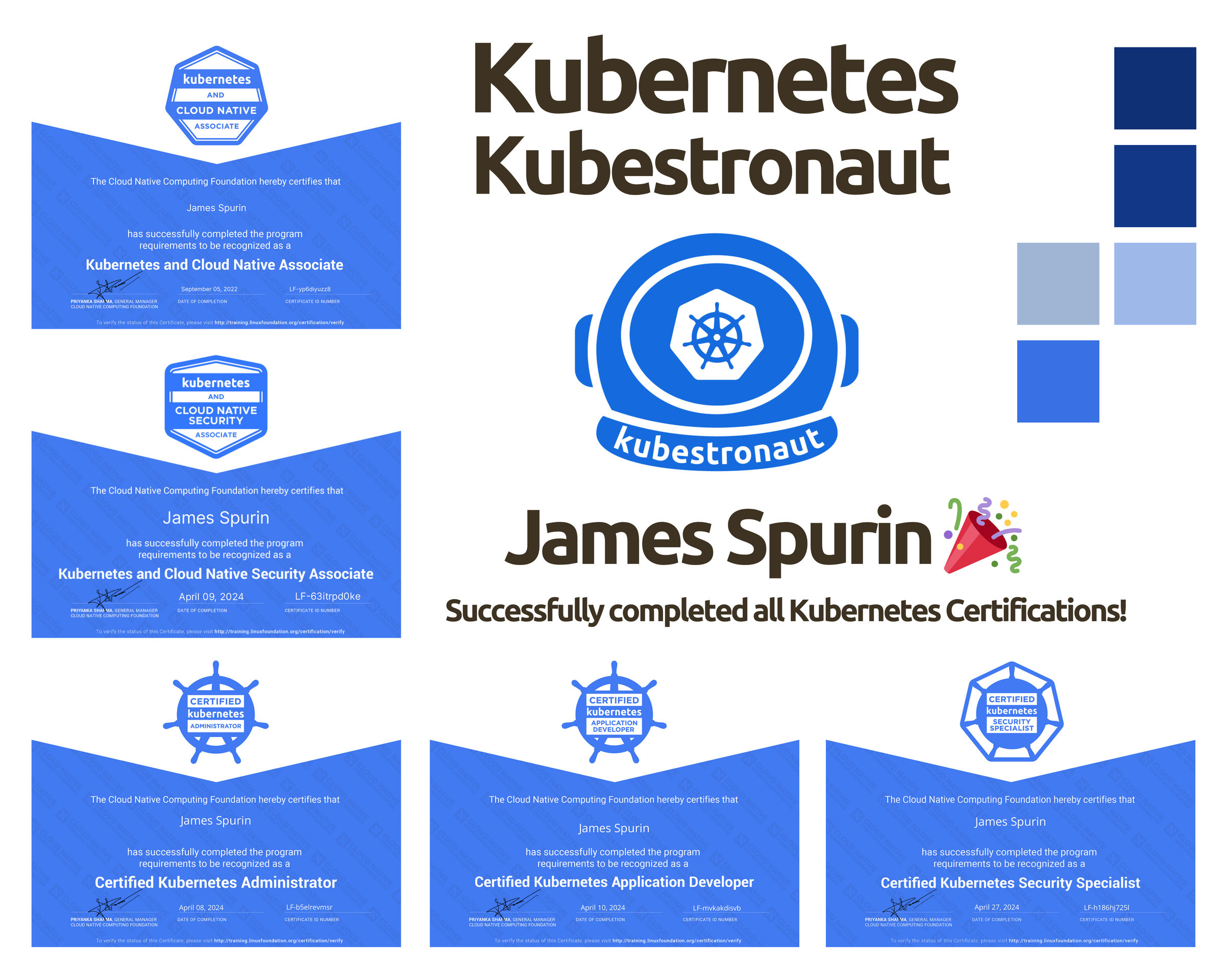
James Spurin, your instructor for these KCNA Practice Exams, holds a current KCNA certification and commits to maintaining this certification as long as the course is offered. He is also recognised as a Kubestronaut, meaning that he is qualified in all of the Kubernetes Certifications!
By achieving the KCNA certification, you'll be taking a step towards the path to becoming a Kubestronaut yourself, building the foundational cloud-native knowledge that serves as the cornerstone for advanced Kubernetes certifications.
Meet Your Instructor
James Spurin is a distinguished expert in cloud-native technologies, backed by over 25 years of professional industry experience spanning infrastructure engineering, DevOps, and modern container orchestration. As a CNCF Ambassador and Docker Captain, he regularly contributes to the community through speaking engagements, workshops, and technical content.